
Intro to Radio Astronomy
Exploring the Invisible Universe
Join the Waitlist
Sign up for the waitlist to receive updates and information how to register for the course.
Course Description
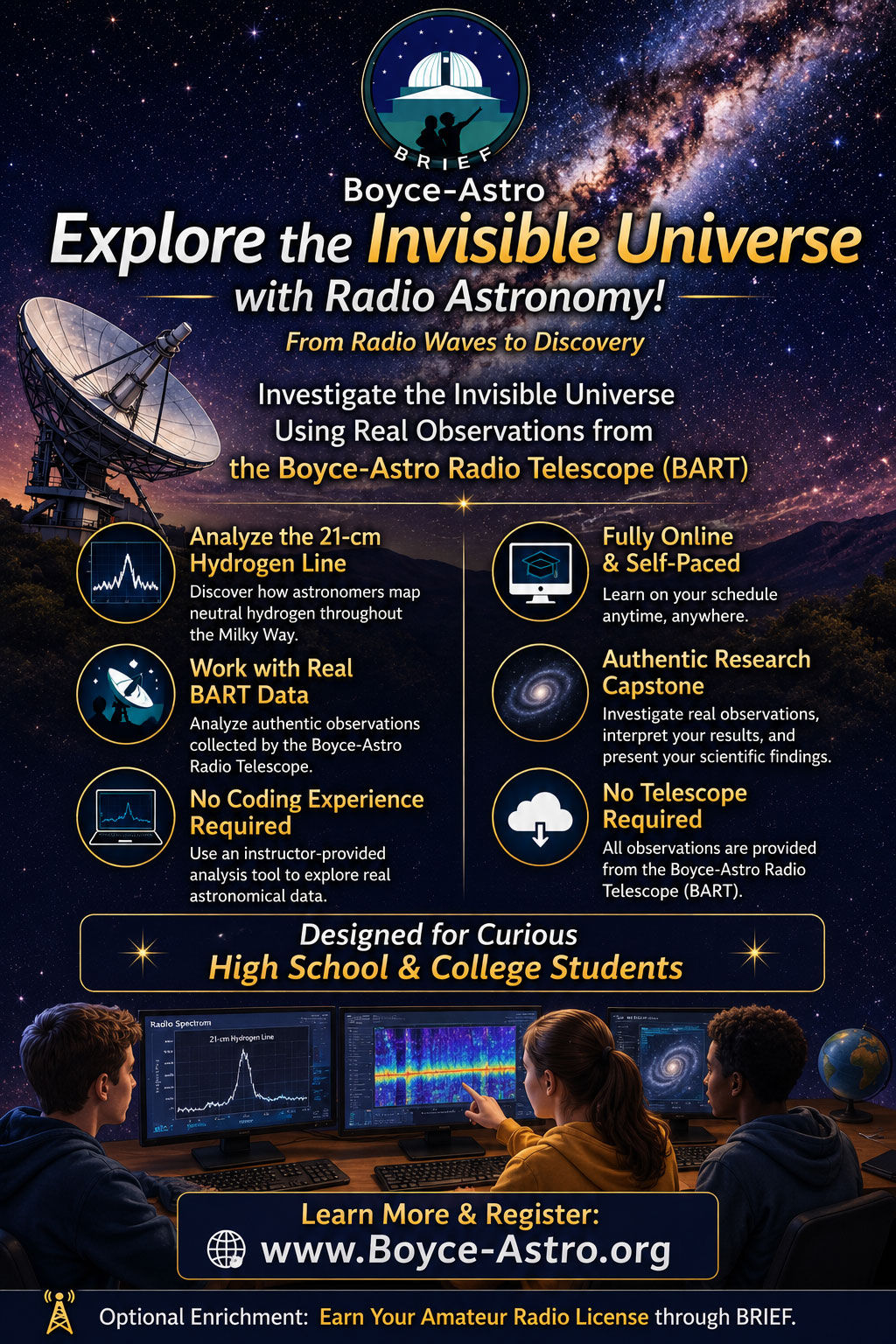
Most of what we know about the universe comes from visible light—but the cosmos emits radiation across the entire electromagnetic spectrum. Radio astronomy allows us to study a hidden universe filled with cold hydrogen gas, pulsars, supernova remnants, black holes, distant galaxies, and other objects that are invisible to the human eye. By detecting radio waves rather than visible light, astronomers can investigate some of the oldest, largest, and most energetic phenomena in the universe.
This asynchronous online course introduces students to the science and technology of radio astronomy through a combination of video lectures, guided activities, and authentic scientific data analysis.
Students will learn how radio waves are produced, how radio telescopes are designed and operated, and how astronomers transform faint radio signals into meaningful scientific discoveries.
Along the way, we will explore the history of radio astronomy, compare optical and radio observations, examine the structure of the Milky Way through the 21-centimeter hydrogen line, investigate pulsars and active galaxies, and discover how modern observatories such as the Very Large Array, ALMA, FAST, MeerKAT, the Square Kilometre Array, and the next-generation Very Large Array are expanding our understanding of the universe.
Rather than relying solely on simulations or textbook examples, students will work with real observations collected by the Boyce-Astro Radio Telescope (BART), a research-grade radio telescope located in Tierra del Sol, CA.
Throughout the course, students will learn how professional astronomers collect, process, and interpret radio data using many of the same techniques employed in modern observational astronomy.
The course is designed for independent learners and is delivered entirely asynchronously, allowing students to progress through the material at their own pace within the course schedule. Each module includes recorded lectures, guided notes, demonstrations, quizzes, and hands-on activities that reinforce the concepts introduced in the lessons.
Course Modules
- Introduction to Radio Astronomy
- Waves, Signals, and the Science of Detection
- Building and Using a Radio Telescope
- The Radio Sky
- The Hydrogen Line (21 cm)
- The Invisible Universe – Beyond Visible Light
- Interferometry and High-Resolution Imaging
- Modern Radio Observatories & the Future of Radio Astronomy
- Interpreting Real Radio Telescope Data
Capstone Project
The course culminates in an authentic scientific investigation using real observations from the BART.
Working in small teams, students will process actual radio telescope data using an instructor-provided analysis pipeline, generate calibrated hydrogen spectra, and investigate the motion of neutral hydrogen within the Milky Way.
Students will compare multiple observations, identify the location and characteristics of the 21-cm hydrogen line, determine whether the observed emission is redshifted or blueshifted, and interpret what these measurements reveal about the distribution and motion of hydrogen gas in our galaxy.
Findings will be presented in a final scientific presentation or report that demonstrates both their understanding of radio astronomy and their ability to analyze authentic astronomical data.
By the end of the course, students will have experienced the complete process of modern observational astronomy—from understanding how radio telescopes collect data to interpreting real observations and communicating scientific conclusions based on evidence.
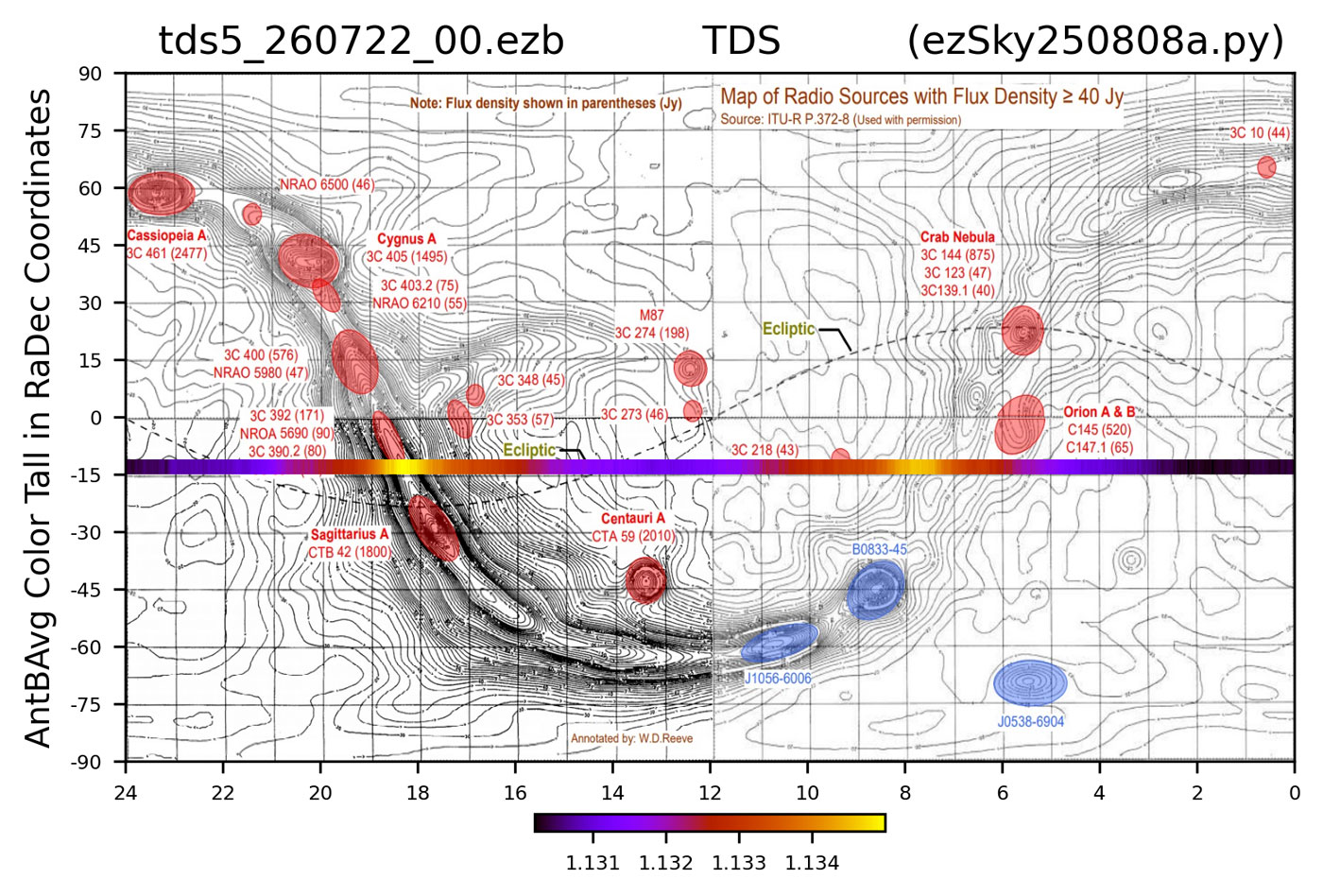
Example results from data analysis
How To Join The Course
Join the Intro to Radio Astronomy waitlist to receive updates and information how to register for the course.
As with all Boyce-Astro courses and seminars, you need to take our FREE IntroSTARS™ online self-paced course and pass a final quiz as a prerequisite to participate. It requires about 6 hours of lessons and as much time as you wish to use the study guides and chapter quizzes.
If you have not taken a Boyce-Astro course or IntroSTARS™, please go to the IntroSTARS™ page to get started.
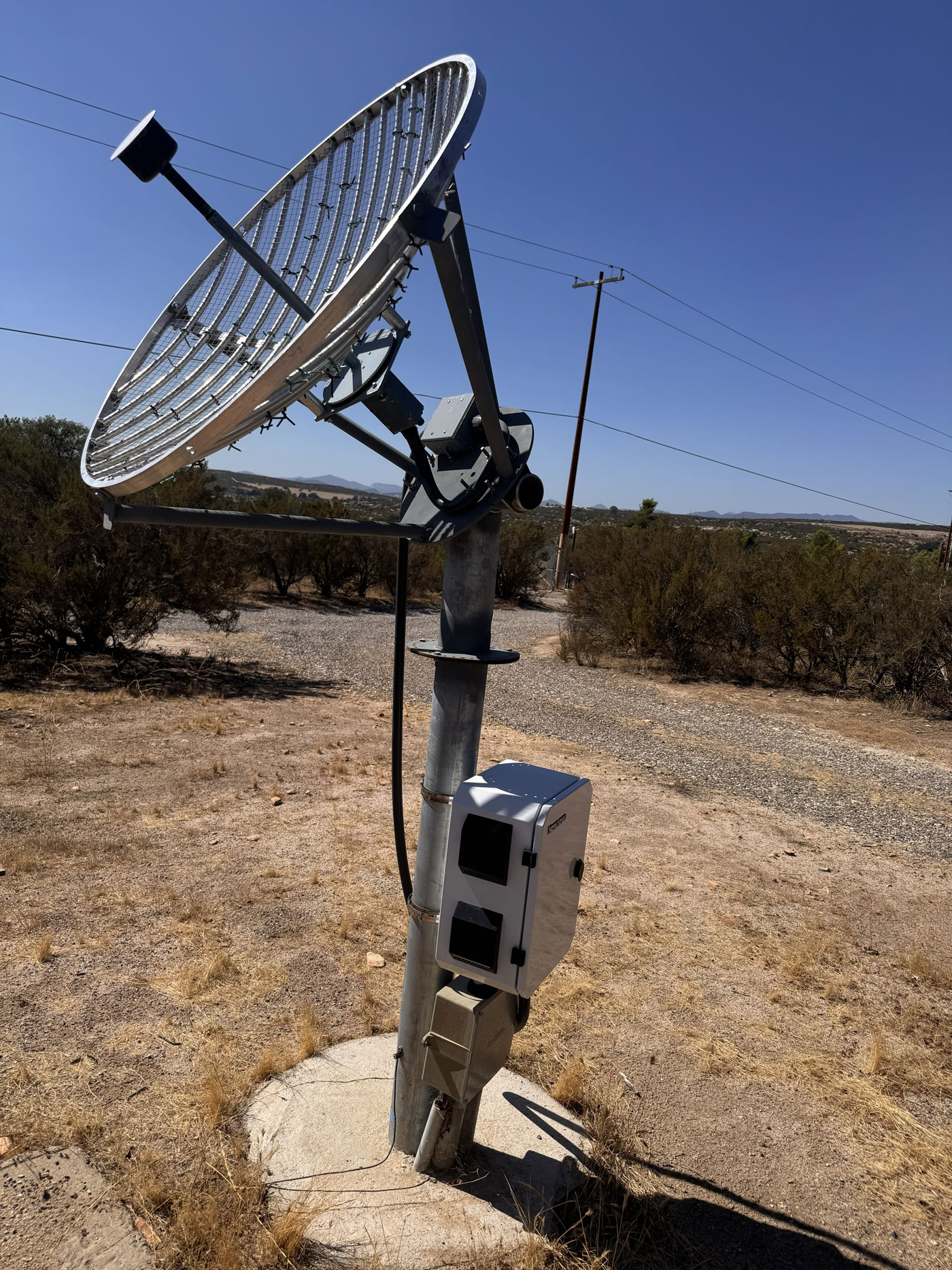
Boyce-Astro Radio Telescope (BART)